Navigating the Digital Highway: Understanding IP Addresses and CIDR Blocks from Scratch

WhoAmI => notes.sohag.pro/author
Understanding IP Addresses and CIDR Blocks from Scratch
What is an IP Address? Your Digital Home Address
Imagine the internet as a massive city, and each device is like a house. Just as every house has a unique address, every device connected to the internet has a unique identifier called an IP (Internet Protocol) address. This address helps data find its way from one device to another, just like a postal address helps mail reach the right destination.
Binary and Decimal: The Language of Computers
Understanding Binary
Binary is the computer's native language - a system using only two digits: 0 and 1. Think of it like a light switch that can only be on (1) or off (0). Every piece of digital information is essentially a series of these switches.
Decimal: Our Familiar Number System
Decimal is the number system we use daily, with 10 digits (0-9). When we talk about IP addresses, we typically use decimal notation.
Conversion Magic: Binary to Decimal
Easy Conversion Trick
Each binary digit (bit) represents a power of 2:
Far right bit = 2^0 (1)
Next bit = 2^1 (2)
Next bit = 2^2 (4)
And so on...
Example Conversion: Binary: 1010
1 × 2³ = 8
0 × 2² = 0
1 × 2¹ = 2
0 × 2⁰ = 0 Result: 8 + 0 + 2 + 0 = 10 (Decimal)
IP Address Structure
An IP address is typically 32 bits long (IPv4), divided into four octets:
Each octet is 8 bits
Range: 0-255 in decimal
Example: 192.168.1.1
IP Address Classes
Class A: 1.0.0.0 to 126.255.255.255
Class B: 128.0.0.0 to 191.255.255.255
Class C: 192.0.0.0 to 223.255.255.255
CIDR: Classless Inter-Domain Routing
CIDR is like a flexible zoning system for internet addresses. Instead of rigid address classes, it allows more precise network segmentation.
CIDR Notation
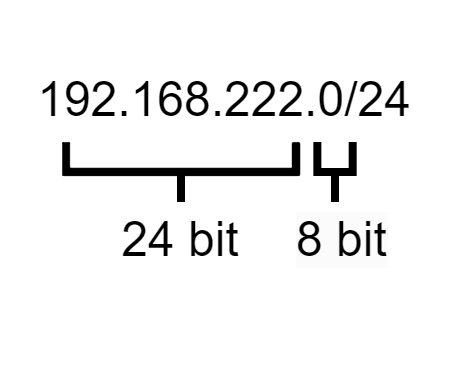
Format: IP Address/Prefix Length
Example: 192.168.1.0/24
"/24" means first 24 bits are network portion
Meaning 24/8=3, first 3 portion is fixed, only last portion can be changed to 0-255
Real-World Analogy
Think of CIDR like a neighborhood:
IP Address = Specific house
Prefix = Defining the entire neighborhood boundaries
Subnet Mask Conversion
/24 = 255.255.255.0
/16 = 255.255.0.0
/8 = 255.0.0.0
Practical Applications
Network Segmentation
Businesses use CIDR to:
Organize network infrastructure
Implement security boundaries
Manage IP address allocation efficiently
Cloud and Hosting
Cloud providers use CIDR blocks to:
Allocate IP ranges to customers
Manage network isolation
Enable secure multi-tenant environments
Advanced Considerations
IPv6
128-bit address space
Solves IP address exhaustion
Notation: 2001:0db8:85a3:0000:0000:8a2e:0370:7334
Subnetting Strategies
Calculate usable host addresses
Plan network growth
Optimize network performance
Common Challenges and Solutions
IP Address Exhaustion
NAT (Network Address Translation)
IPv6 adoption
Dynamic IP allocation
Security Implications
Use of private IP ranges
Implementing firewall rules
Network segmentation
Pro Tips
Always have a network addressing plan
Use online CIDR calculators
Understand your network's specific requirements
Regularly audit and optimize IP allocations
Conclusion
Understanding IP addresses and CIDR blocks is like mastering the road map of the digital world. With practice, you'll navigate network configurations with confidence!


